

5 Paycheck Habits That Keep You Broke — And How to Fix Them
You know that feeling. It hits somewhere around the middle of the week before payday — you open your banking app almost by reflex, and your stomach drops just a little. Not because anything catastrophic happened. Not because you went on a shopping spree or made some reckless financial decision. Just because somehow, some way, the money is almost gone again, and you're not entirely sure where it went. Again.
If that moment of quiet dread feels familiar, this post isn't here to lecture you. It's here to hold up a mirror — because what you're experiencing isn't a character flaw, a math problem, or evidence that you're bad with money. It's evidence that certain habits have quietly taken root in your financial life, and habits, unlike circumstances, can be changed. The women who break the paycheck-to-paycheck cycle don't suddenly earn more money or stumble into financial magic. They identify the specific behaviors that keep them stuck and replace them — one realistic shift at a time.
Let's talk about the five habits doing the most damage, and more importantly, exactly how you break each one.
Habit #1: The "I'll Figure It Out Later" Approach to Money
Spending First, Planning Never
This habit is probably the most universal — and the most quietly destructive — on this entire list of paycheck habits that keep you broke. It's not impulsive or reckless in an obvious way. It looks like simply moving through your week, handling what comes up, and trusting that things will work out. Groceries, a field trip fee, a birthday gift, gas — you handle each thing as it appears because there's no time, energy, or mental bandwidth to do anything else. You're super busy with work and the kids, juggling everything for everyone. You're surviving. That's enough, right?
Reactive money management means you let your paycheck go to the first emergency, obligation, or temptation that comes up. Like that "emergency" trip to Target. Or the online shopping cart that is calling your name. When you spend without a plan, your money doesn't disappear because you failed — it disappears because you never told it where to go. And money without direction always finds somewhere to go on its own. Much like you use a GPS to provide directions, you are the GPS for your money.
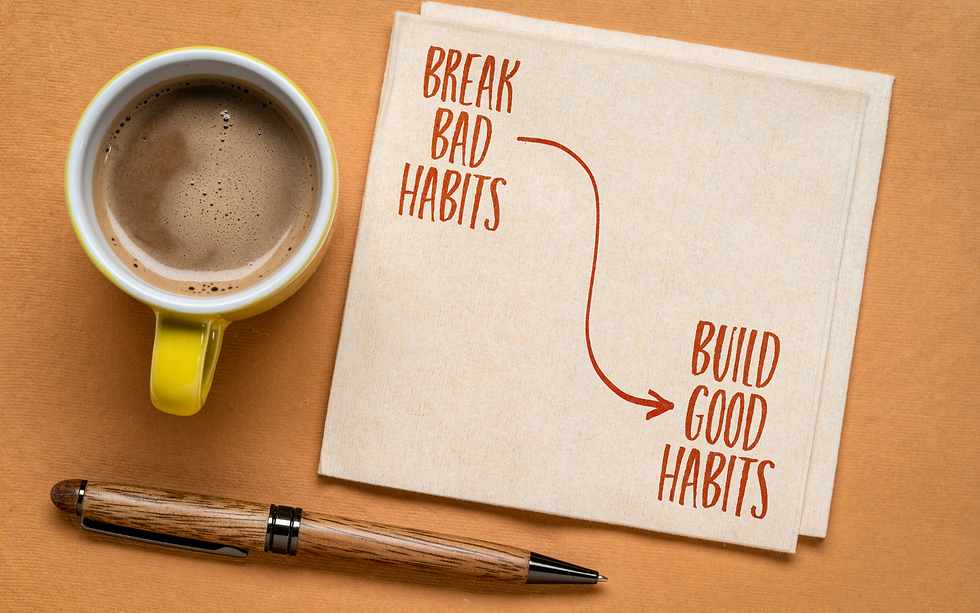
The break the habit strategy here isn't complicated, but it does require one intentional act: give your money a job before it lands in your bank account. Even ten minutes the night before payday — a phone note, a napkin sketch, a simple app — where you write down what this check needs to cover and in what order. Pay bills first, set aside savings second, then prioritize necessities and minor wants last. This isn't a full budget overhaul. It's a weekly ritual that puts you back in the driver's seat before the paycheck even arrives.
The empowering reframe: You're not bad at planning. You've been managing hundreds of moving pieces daily without a system. Give yourself a system and some grace, even a rough one, and watch how different that bank account looks mid-week.

Habit #2: The Emotional Spending Trap
When Exhaustion Becomes a Budget Line Item
Here's a truth nobody talks about in personal finance circles: exhaustion is expensive. When you've worked a full day, picked up the kids, handled ran errands, cooked dinner, cleaned the kitchen, and somehow still have three things on your to-do list that won't get done tonight — you deserve something. A reward. A release. A moment that's just for you.
And there is absolutely nothing wrong with that impulse. The problem isn't that you want small comforts after a hard week. The problem is when those comforts — the drive-through because cooking feels impossible, the online cart you filled at 11 pm, the "treat yourself" purchase that seemed completely reasonable in the moment — become the default emotional management strategy that your bank account quietly funds on your behalf, whether it can afford to or not.
Emotional spending is particularly tricky for busy women because the emotional driver is completely legitimate. You are exhausted. You do deserve comfort and joy. The shift isn't about eliminating those moments — it's about creating a small, intentional budget for them so they don't eat into the money that was meant for something else. Imagine knowing you have a set amount each week designated specifically for your personal "exhale" — coffee, a show, a massage, whatever fills your cup — and spending it guilt-free because it was already planned for. That's a very different feeling from the low-grade financial guilt that follows unplanned emotional spending.
The break the habit strategy: name your comfort "exhale" spending and give it a number. Decide what it's worth to you each week — a realistic, honest number — and let yourself spend it freely within that container. When the comfort fund is gone, it's gone. This single act removes the shame spiral while protecting the rest of your paycheck from being quietly consumed by stress relief.
The empowering reframe: You're not undisciplined. You're human, you're tired, and you've been trying to meet a real need without a plan for meeting it. Now you have one.

Habit #3: The No-Budget Budget
When the Plan Lives Only in Your Head
Ask most people if they have a budget, and they'll say yes. Ask them to write it down right now, and the number who can do it accurately — including all the irregular expenses, the small purchases, the subscriptions, the occasional but predictable costs — drops dramatically. This is the no-budget budget: the mental ledger that feels like a plan but functions more like a loose impression of one, and a paycheck habit that keeps you broke.
The mental budget works reasonably well for the big, obvious expenses. Rent or mortgage. Car payment. The phone bill. But it consistently underestimates the cumulative weight of smaller, irregular spending — and more importantly, it leaves wide-open space for "just this once" decisions that feel individually harmless. A mental budget has no hard lines, only soft suggestions. And soft suggestions bend under any real-life pressure, which means they bend constantly.
The written budget — even a rough, imperfect one — creates a different relationship with your money. Seeing the numbers on paper or on a screen changes how real they feel. It removes the comfortable ambiguity that the mental budget relies on and replaces it with clarity. Clarity is sometimes uncomfortable, but discomfort that shows you the truth is infinitely more useful than the comfortable fog of "I think I'm okay."
The break the habit strategy: start with a bare-bones written budget for just this pay period. Not a perfect one. Not a color-coded spreadsheet. Just your income at the top, your known fixed expenses listed below it, and a realistic estimate for variable spending in the main categories of your life. The act of writing it down — and comparing it to what actually happens — will teach you more about your money patterns in two weeks than years of mental math ever will.
The empowering reframe: A written budget isn't a cage. It's a map. And you can't navigate toward financial freedom without knowing where you actually are right now.

Habit #4: Ignoring the Small Recurring Charges
Death by a Thousand Subscriptions
Imagine if, every single month, someone reached into your wallet while you were sleeping and quietly took a few dollars here, a few dollars there — so gradually and so consistently that you stopped noticing it was happening.
That's essentially what unmonitored recurring charges do to a paycheck. Each one, viewed in isolation, feels completely justifiable. The streaming service you've had for years. The app you downloaded during a free trial and never cancelled. The subscription box seemed like a good idea last spring. The gym membership. The cloud storage. The meal kit service that you used twice.
None of these charges is a villain individually. But collectively, unexamined recurring expenses have a remarkable ability to consume a meaningful chunk of a paycheck while generating almost no actual value in return — because the value stops the moment you stop using the service, which often happens long before the charging does.
The break the habit strategy here is one of the highest-ROI financial tasks you can do: spend thirty minutes this week doing a full subscription audit. Go through your bank and credit card statements for the last two months and highlight every recurring charge you find. For each one, ask a single question: Did I actually use this enough last month to justify renewing it? Cancel anything that doesn't earn a clear "yes." The money you recover doesn't require any behavior change — it requires one afternoon of honest accounting and a few cancellation clicks.
This is also a great habit to build into your quarterly financial rhythm. Set a reminder every three months to run through your statements again. Subscriptions have a way of multiplying when you're not looking.
The empowering reframe: This isn't about deprivation. It's about making sure every dollar leaving your account is leaving because you consciously chose it — not because you forgot to tell it to stop.

Habit #5: Waiting for the "Right Time" to Start
The Most Expensive Paycheck Habit That Keeps You Broke on This List
After the holidays. After the summer. After the kids go back to school. After this next paycheck, which will definitely be better. After I get that raise. After things calm down. After life gets just a little bit less chaotic.
If any version of that sentence has lived in your head — quietly, persistently, always just a few weeks in the future — then you already know this habit. And you probably also already know, somewhere under all the good intentions, that the "right time" has a frustrating tendency to never quite arrive.
There's always another reason to wait just a little longer. And waiting, in personal finance, is never neutral. Every month you wait to start a savings habit, to address the debt, to create a budget, is a month that the paycheck-to-paycheck cycle continues on autopilot. And we both know how you feel about living paycheck to paycheck.
The truth about the right time is almost annoyingly simple: the right time is always imperfect, always inconvenient, and always now. Not because things are ready, but because waiting for readiness is the habit that most reliably keeps people exactly where they are. The women who break this cycle don't do it when their finances are suddenly stable — they do it while things are still messy, because they stopped waiting for the mess to clear before they started. They simply made a decision one day to start. So if you're looking for a sign to start, this is it.
The break the habit strategy isn't to overhaul everything today. It's to do one thing. Literally one. Write down your income and your fixed expenses. Download a free budgeting app and enter this week's spending. Transfer five dollars to a savings account and name it something that matters to you, like Sanity Savings, Future Fund, or Family First. Whatever resonates with you and makes the savings personal, so you will stick with it. Start somewhere specific and small, because small and started is infinitely more powerful than perfect and pending.
The empowering reframe: The right time isn't coming to find you. You have to be the right time. And you already have everything you need to take one step today.

Here's What Happens When You Break These Habits
None of these five habits requires a dramatic life overhaul to address. What they require is recognition — that moment of honest clarity when you see the pattern clearly enough to name it — and then one concrete shift at a time. Not perfection. Not a complete financial transformation by next month. Just a direction that's different from the one you've been moving in.
When you plan before you spend, tell your money where to go, name your comfort spending, write down the numbers, audit what's quietly leaving your account, and stop waiting for a better moment to begin — things change. Not overnight, but consistently. The paycheck starts lasting longer. The anxiety starts loosening its grip. And somewhere in the middle of that progress, something else starts to feel possible: an actual financial cushion. An emergency fund. A future that isn't entirely dependent on everything going right this month.
That's the goal. Not just surviving the next paycheck, but building something that lasts beyond it.
Your Next Step Starts Here
If this post felt like it was written for your life, it was. The Break the Paycheck Cycle, Build Your Future campaign at Goal Getter Life Blog exists for exactly one reason: to give busy, hardworking moms the tools, the strategies, and the community to stop surviving and start thriving.
One of the most powerful first milestones on this journey is your first $1,000 emergency fund — a number that might feel impossible right now but becomes very real, very fast, when the habits above start shifting. That one small financial cushion changes the entire dynamic of how you experience money. It turns an unexpected car repair from a crisis into an inconvenience. It gives you breathing room that the paycheck-to-paycheck cycle has been stealing from you.
You don't have to figure this out alone, and you don't have to figure it all out today. Start by exploring more of the Break the Paycheck Cycle content right here on the blog, where we walk through practical budgeting strategies built for real life — your life. Subscribe to stay connected, or grab one of our free budgeting resources designed specifically for busy moms who are ready to make this the last year they say, "I'll deal with it later."
You've already taken the first step. You read this post, you recognized yourself in it, and something in you said yes — I want this to change. That's not a small thing. That's the beginning of everything.
→ Ready to take the next step? Browse our budgeting resources for moms or subscribe to Goal Getter Life Blog for weekly tools and strategies to help you break the cycle for good.


Comments